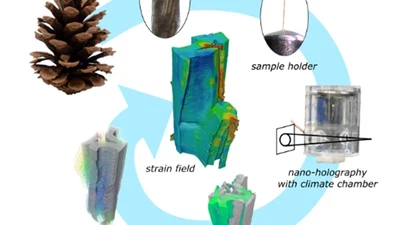
Quantifying hygroscopic deformation in lignocellulosic tissues: a digital volume correlation tool comparison
Evaluate DVC methods on nanoCT data of lignocellulosic tissues.
kim-ulrich
I’m a research scientist at the Hereon’s outstation located at the largest particle accelerator in Germany (DESY, Hamburg). Currently, I’m a member of Imaging and Data Science Department of the Institute of Metallic Biomaterials and a member of the X-Ray Imaging with Synchrotron Radiation Department of the Institute of Materials Physics.
Prior to this, I completed my doctoral research at the Computer Graphics and Multimedia Systems Group under the supervision of Prof. Andreas Kolb and the co-supervision of Prof. Peter Haring Bolívar at the University of Siegen in 2023.
I develop deep neural networks to solve inverse problems in tomography imaging (at Hereon’s μCT and nanoCT beamlines) for materials science experiments. Currently, I’m particularly focusing on memory efficiency of volumetric networks and knowledge-guided deep learning methods for downstream tasks such as:
Please feel free to reach out for collaboration and opportunities! 😃
Evaluate DVC methods on nanoCT data of lignocellulosic tissues.
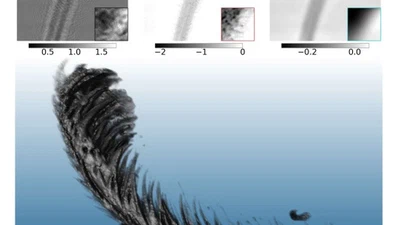
SelfPhish: self-supervised and physics-informed GANs for phase retrieval.
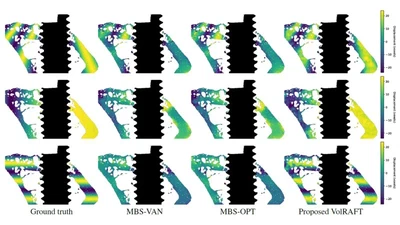
VolRAFT: extend optical flow network RAFT to volumetric data for digital volume correlation (DVC).

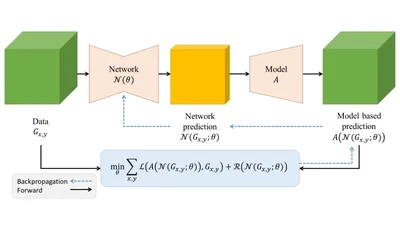
Deep Optimization Prior approach allows to find better local optima in the non-convex energy landscape.
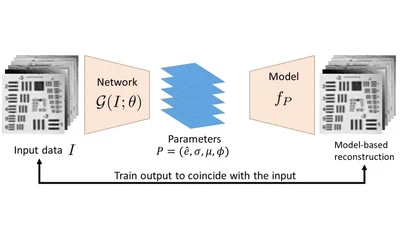
An unsupervised model-based autoencoder in which the encoder network predicts suitable parameters and the decoder is fixed to a physical model.
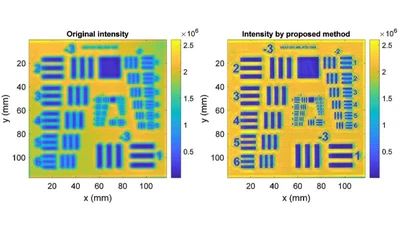
A novel method to enhance Frequency Modulated Continuous Wave (FMCW) THz imaging resolution beyond its diffraction limit.

We are developing INR and Transformer-based frameworks to scale volumetric neural networks for massive synchrotron and biomedical CT datasets.